
2023 marked the hundredth anniversary of the original publication in German of philosopher Martin Buber’s hugely influential and very peculiar book, Ich und Du. Born in Vienna in 1878, the author was part of the Jewish intellectual cohort that was devastated by the Holocaust. He became both a prominent Zionist and a leading advocate of Arab-Israeli coexistence, until his death in Jerusalem in 1965. One of the peculiarities of his seminal book, however, is that while it addresses a particular historical moment, it is in no sense a political book. It has a pre-political, even pre-philosophical quality, and that’s what makes it just as relevant a century on.
In his introduction to the new centennial edition, Buber scholar Paul Mendes-Flohr helpfully makes a connection between Buber’s concerns in 1923 and the current moment: ‘an age in which human worth is ever-increasingly measured by economic utility, vocational skills, and professional and social status’. Then and now, such tendencies reduce individuals to useful objects rather than ‘fellow human beings in the singularity of their existential uniqueness’. It is the non-instrumental encounter between such unique beings that Buber explores in the book, and that he felt was increasingly difficult in modern society.
Continue reading “The Unicorn and the Donkey… or, human connection in an age of identity politics”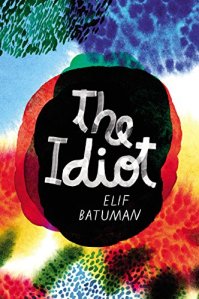 The Idiot, by Elif Batuman (Jonathan Cape 2017)
 Dolan Cummings